

How To Repair A Bumper Paint Chip
Chips in your car's paint aren't just an eyesore. They can likewise expose your car'south metal to further corrosion. You may non exist able to make your car's terminate look showroom fresh, but with a reasonable level of competence, you can make your car look much meliorate and preclude further rust formation without an expensive trip to the trunk shop. Hither'southward how.
Tools You May Need for Bit Repair

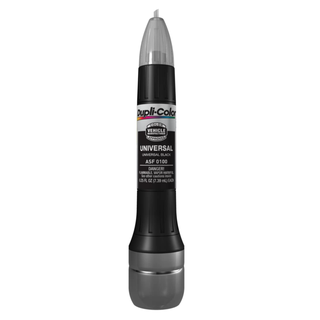
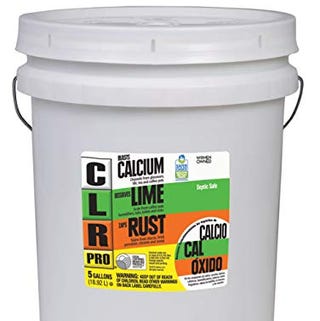
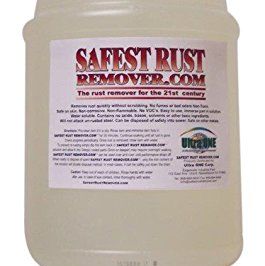
Step 1: Touch Upwardly Kits
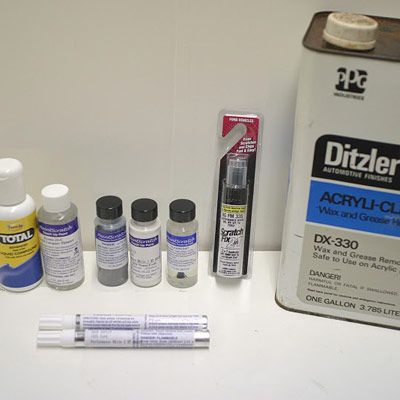
Duplicolor has simple pigment touch-up kits that you can buy at your local motorcar parts store, and many dealerships can sell you a paint pen in your auto's verbal factory color. You tin can also purchase more involved touch-upward kits and supplies online. For instance, the kit we tested from PaintScratch came with primer, clearcoat, paint thinner, a bottle of rubbing compound, and color-matched paint.
PaintScratch used information in the machine's Vehicle Identification Number—the long combo of letters and numbers unremarkably referred to every bit a VIN—to verify the correct shade of pigment, which is a pretty common practice. These kits are more expensive and accept more steps, simply ultimately provide a amend, longer lasting effect.
Step 2: Check the Door
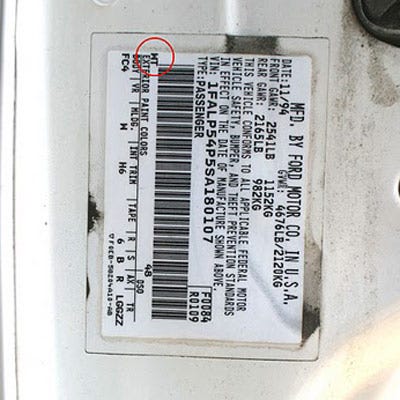
You need to identify the paint code for your vehicle to ensure y'all are getting the correct shade of paint, which is like shooting fish in a barrel to find if your car has never been repainted a unlike color. On most cars built since 1983, this information may exist found on a sticker on your driver's door or door jamb. To be absolutely sure of a match, the pigment vendor may as well need the VIN, which can be establish on that same door sticker or on the VIN plate on your dash.
If your machine has been repainted a dissimilar color in its lifetime, you'll obviously need to find that color instead. Hopefully that colour is listed somewhere in the records for the car, just if not, you'll likely want to shop for paint in person to make sure you're getting a skilful lucifer.
Footstep 3: Go Shopping
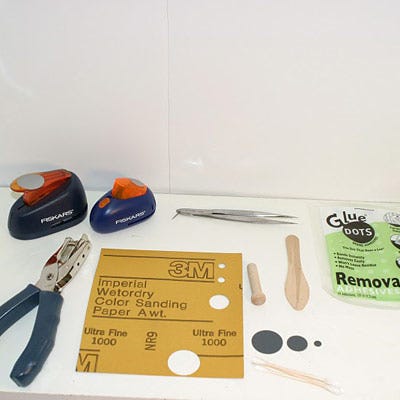
Preparation is the cardinal to getting proficient results. You'll need very fine thou-grit, 3M Wetordry sandpaper, diverse craft sticks, cotton swabs, thin-tip splinter tweezers, mucilage dots, and diverse paper punches. Everything except the tweezers came from a local craft shop.
This content is imported from {embed-proper name}. You may be able to discover the same content in another format, or you may be able to find more than information, at their web site.
Stride 4: Making Your Sanders
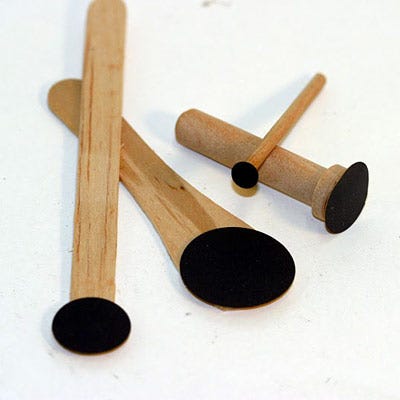
Virtually off-the-shelf sanding tools would harm a lot of perfectly fine pigment around the flake, then we'll need to make our own miniature sanders. Use the punches to cut out small sandpaper circles and glue them to the craft sticks and dowels. Don't be afraid to call up outside the box at the craft store, either. We found a $i.99 bag of wooden axles with squeamish rounded ends that worked well on larger chips.
Step 5: Wash the Automobile
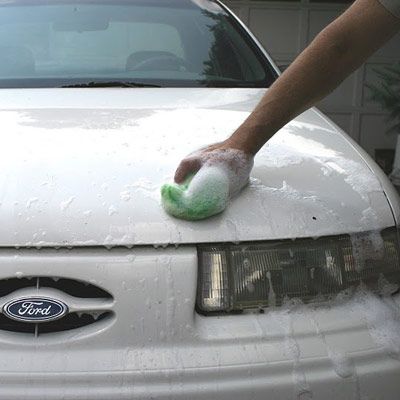
First, launder the machine with warm soapy h2o, rinse thoroughly, and let it dry. You desire to be sure the automobile is completely costless of dirt in order to get a smoothen repair.
Step half-dozen: Remove Built Upward Waxes and Coatings
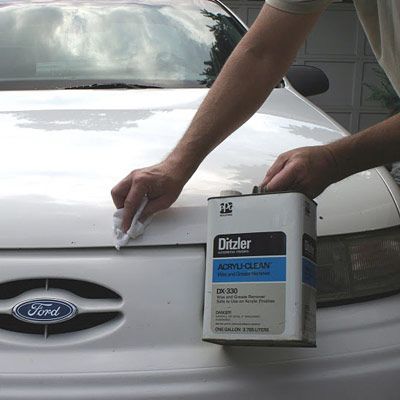
Next, remove any wax, grease, and silicone that would foreclose fresh pigment from adhering to the surface of your car. PPG Acryli-Make clean is one such solvent that's prophylactic for this, and tin be establish at professional person body shop stores and some larger auto parts stores.
Step 7: Make full Small Chips
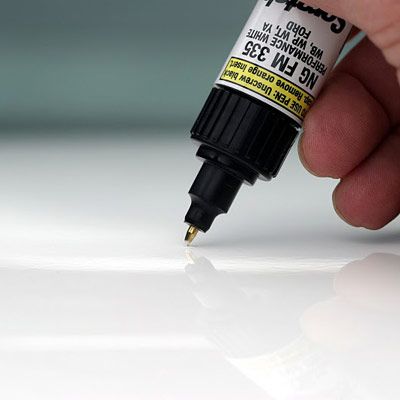
For very minor chips, we recommend using a paint pen. The small tip on the Duplicolor paint pen was easy to command and made filling the divot piece of cake. Apply enough paint that it rises barely above the surface. This allows for shrinkage during drying, and whatever slight excess can be wet sanded down and and so rubbed smooth.
Most stone fries are probably on your hood'due south leading edge. To prevent the pigment from running before it dries, you can lift the hood until the chip is horizontal to the ground to go on the paint in its place even while wet.
If these are the only chips your auto has, you're lucky! Otherwise, read on.
Step 8: Make clean Up Medium Chips
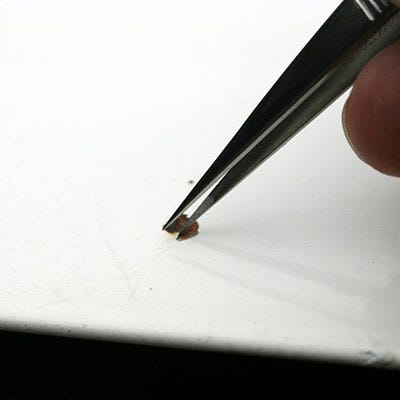
If your remaining chips are larger, skip ahead to Step xi. For medium size chips, we'll need to apply the castor applicator. Before your start brushing on anything, clean out whatsoever loose droppings and pigment from inside the chip with your tweezers.
Step 9: Apply the Primer
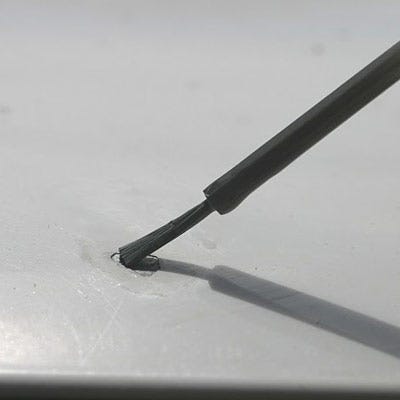
Use the primer with the applicator castor as directed. It'southward important to read and follow the instructions, as these can vary between paint vendors. Pay close attention to how long it will take for the pigment to dry out for each layer, be it primer, pigment, or clearcoat. Working over moisture paint could leave crude spots, bubbling or holes in the cease, which wouldn't do as much to protect or raise the appearance of your car.
Step ten: Use the Paint
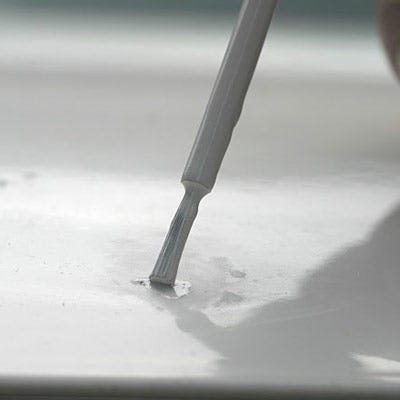
After the primer cures, apply the paint. At this point, the filled scrap on our examination car didn't look likewise bad from 6 feet away. Wet sanding, applying the clearcoat, wet sanding again, and and so rubbing the flake smoothen improved the await of the repair considerably. After that, the repair looked groovy from about three feet away, depending on your eyesight and the corporeality of sunlight. You lot'll take to determine how much work you want to invest hither.
Footstep 11: Clean Up Large Fries
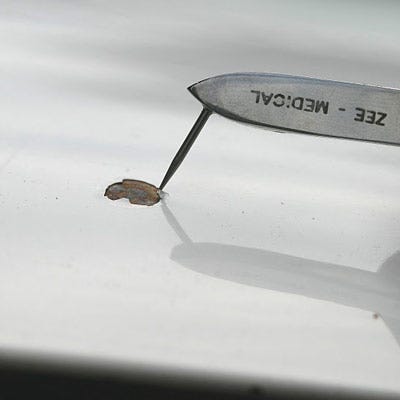
The residuum of these steps are for fixing large paint chips, which are the ones most likely to expose the car's bare metallic to the elements and lead to further harm. On larger fries and those that already take a rust colony growing, use the splinter tweezers or a fine dental selection to scrap off any loose paint.
You must be very careful because y'all can easily plow a pocket-size chip into a big ane if you loosen upwardly any paint that isn't loose already. However, if yous don't remove the loose paint, the pigment will somewhen flake off on its ain and spoil the repair.
Step 12: Remove Rust
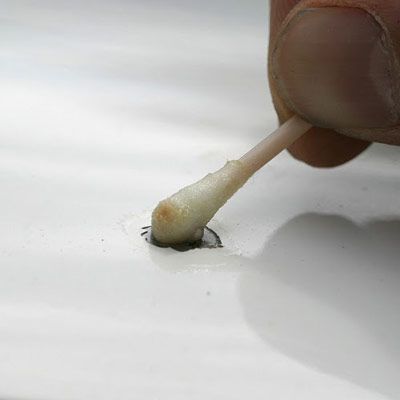
Swab CLR, Ultra I'southward Safest Rust Remover, or an equivalent rust remover into the bit to dissolve and remove rust. Keep doing this until your swab comes up make clean. Side by side, rinse the rust remover out of the chip with isopropyl alcohol. If you don't remove all the rust, the paint won't properly adhere to the car and rust volition spread under the paint.
Step 13: Sand the Edges
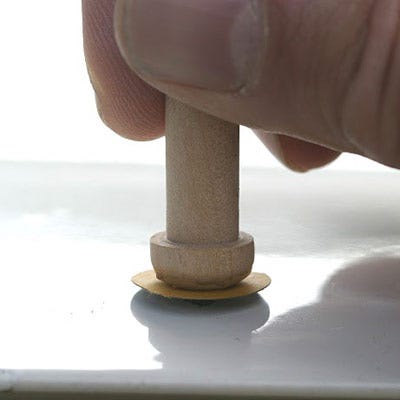
Carefully dry-sand the edges of the chip until they look smoother and more rounded off. Yous don't want any abrupt edges that will brand the repair look more obvious. The curved shape of the wooden axle cease made it the platonic tool for this. H2o will restart the rust procedure, so practise this sanding dry. The 3M Wetordry sandpaper clogs quickly when used for dry sanding, but the adhesive dots make changing sanding circles easy.
Step 14: Apply Leverage
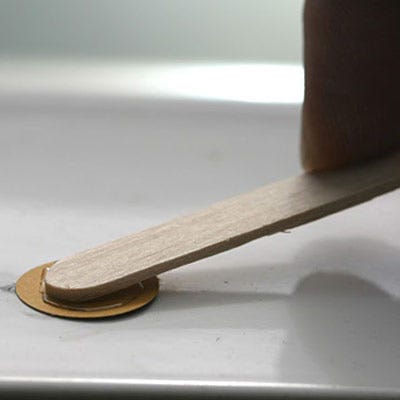
Now is the time to whip out a flat arts and crafts stick to use with a pocket-sized circumvolve of sandpaper. Using the border of the flat wood sanding stick volition apply more leverage when sanding the bit and the surface area effectually information technology, but don't sand too far outward or you'll sand through the clearcoat and make the spot more noticeable.
Y'all want to taper the edges of the bit so the boundaries of your repair are less noticeable. Make sure you lot wipe or accident off the remnants of your sanding job before moving on to the next steps.
Pace 15: Utilise the Primer
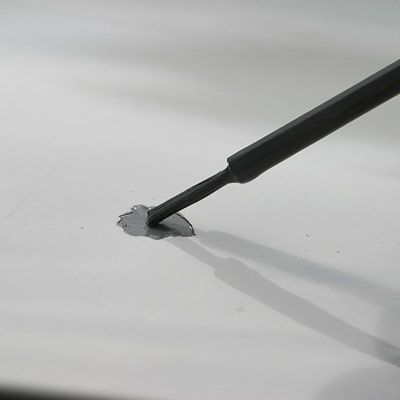
Carefully employ the primer from the center outward. You don't want to go beyond the edge of the chip. If you exercise, utilize a cotton swab moistened with lacquer thinner to quickly wipe up the excess primer. Keep all of your painting supplies shut at hand on a minor table. You don't desire to have to go searching and fumbling after a mistake as the paint doesn't stay liquid for long.
Step sixteen: Let the Primer Dry out
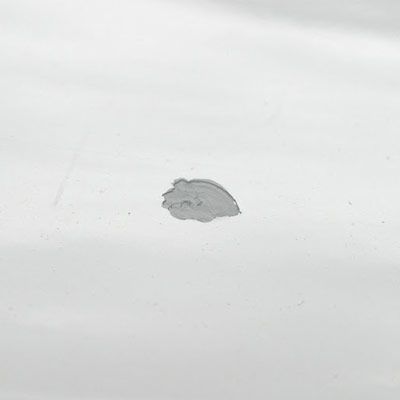
Let the primer dry to full cure, which could take a while depending on temperature and humidity. Be sure to follow the directions that came with your paint or repair kit, every bit they tin can advise you lot on the number of coats you'll need for primer, paint, and clearcoat as well as the amount of fourth dimension each layer needs to dry. Budget enough time to let the primer completely dry out before covering it with paint.
Footstep 17: Wet Sanding
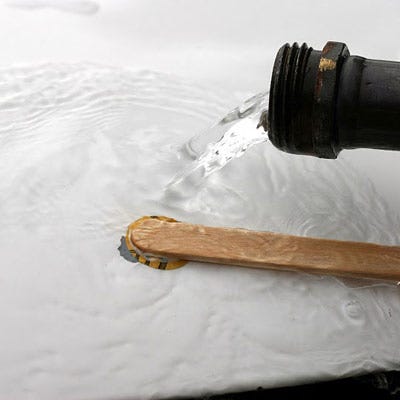
Once the primer dries, y'all can wet sand information technology to prepare the primer base for paint. Once over again, don't sand as well far from the center of the bit or you will sand through the surrounding clearcoat. Sanding through the clearcoat is particularly noticeable if your machine has dark or metallic paint.
We recommend using a stronger, h2o resistant adhesive for these wet sanding sticks. It'south non- removable, but yous won't need to change sandpaper as frequently when wet sanding. Nosotros pre-fabricated three sticks with sand paper circles on each end for a total of half dozen wet sanders.
Step xviii: Steady Easily
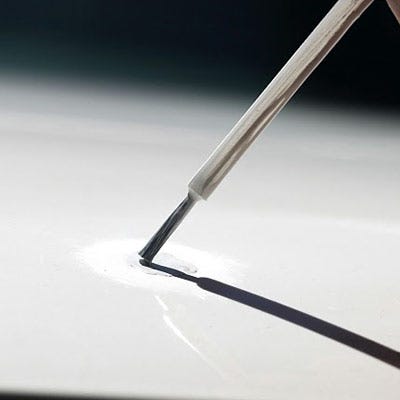
Painting a bit this big with a castor volition never give yous a mill stop, but yous can at least seal the metal back up and make it look squeamish from further away. Steady hands and a modest corporeality of paint on the brush worked all-time. Take it from your local manicurist: Sparse, shine coats are all-time when working with multiple layers.
Double- and triple-check that your primer is dry before you start this. While testing the PaintScratch kit, we made the mistake of painting too soon after a second coat of primer. The solvent in the paint began to dissolve the primer and thin swirls of gray mixed into the white.
Footstep 19: Add together Clearcoat
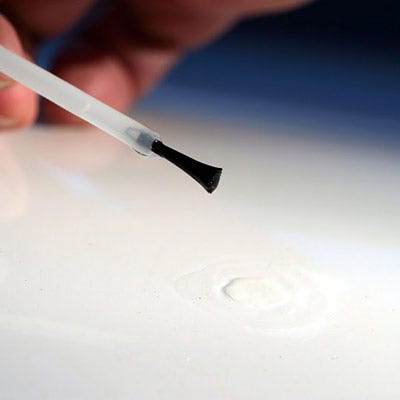
Keep wet sanding the painted spot until it is polish. Next, castor on the supplied clearcoat. Like the paint, clearcoat is lacquer based, thin, and it dries fast.
In this moving picture, you can run across the boundary between the new lacquer and the original enamel. That happens when the edges of your repair aren't sanded down enough to taper into the chip. Be conscientious with your preparation piece of work, and get the chip as shine as possible before you move on to the next step. If you're happy with how your repair looks, though, yous can skip alee to Step 21.
Stride 20: Repair Your Repairs
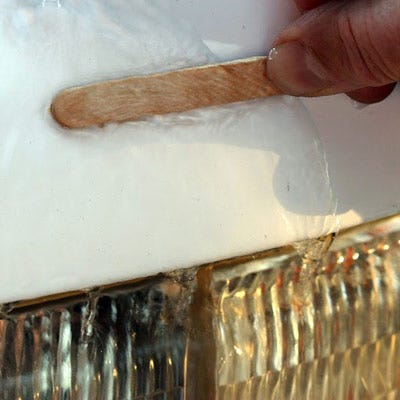
If your repair didn't turn out well the first fourth dimension, don't fret—in that location are ways to salve information technology. After your previous effort dries, sand the spot back down to the primer with a 360-grit 3M Wetordry sandpaper. This time, it's imperative to stay within the repair zone, so y'all probably desire to trim your sandpaper circle to sit even with the radius of your stick. Wipe off any actress dust or moisture, and so repaint the spot. Moisture sand the spot with thousand-grit sandpaper once the paint is completely dry. Add your clearcoat, and so moisture sand again. This tiresome process slowly built upwardly new layers of paint to sit even with the original surface.
Footstep 21: Use Rubbing Compound
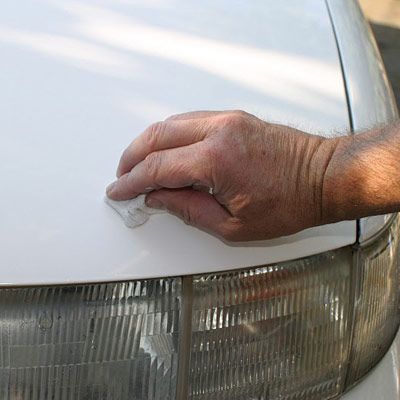
In one case the repair is flush with the residuum of the paint, take some rubbing compound and shine the surface area with a make clean cotton fabric. Wash the expanse with soapy water to clean off all the rubbing compound, rinse thoroughly, and let it dry. Let the repair continue to cure for near a week before waxing your car.
Pace 22: All Done
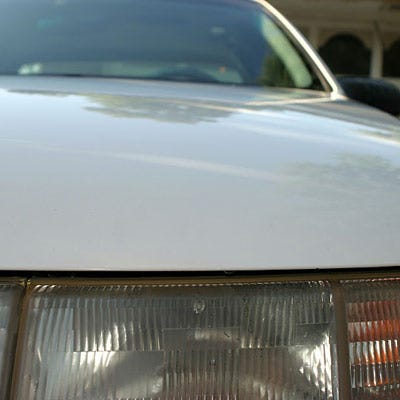
All done! Here is the same area where the big chip was, without any photoshopping. It won't fool a concours judge, but information technology is a big comeback.
Of the products we tested, the Duplicolor pigment pen was the easiest to use on small chips. The color didn't friction match equally well every bit the VIN-matched pigment simply it was a bargain at around $10. The $75.65 kit from PaintScratch was meliorate for larger chips but required a tremendous amount of sweat equity and actress materials, plus the learning curve was steep. It cost Paul about $150 in materials and about 20 hours of work to get his paint chips fixed at dwelling, compared to a quote of about $300 to take his hood repainted.
Unless fourth dimension is of the essence, simple pigment chip repair is an easy enough task to endeavour yourself. Take intendance of chips as soon as yous can! You lot're non simply saving money on a full repaint, but on future repairs. Your paint is your car's offset line of defense from the elements, later all. Treat information technology as such.
This content is created and maintained by a third political party, and imported onto this page to help users provide their e-mail addresses. You may be able to find more information about this and similar content at pianoforte.io

Source: https://www.popularmechanics.com/cars/how-to/a6092/how-to-repair-chipped-car-paint/
Posted by: hunterlithend.blogspot.com
0 Response to "How To Repair A Bumper Paint Chip"
Post a Comment